

I sit on the eve of my journey as a pilgrim without a God. This is not to say that I am Godless. On the contrary, for the first time in my life I find my soul to be full of faith. Perhaps the best clarification of my present state is that I feel a natural and undeniable devotion to a higher power, but with no formal affiliations to the human ideals, of which the details our race continue to toil over. My God has no congregation, no name, no gender, no race, no humanly form at all. In fact to me, they are but a familiar stranger. An awareness which hitherto brings us to the reason for this blog post, and perhaps, the journey at large.
Tomorrow will mark day one of my sabbatical year. A journey with my husband that will, God willing, see us travel across as many European (and a few neighbouring) countries as we can. The logistics for such a trip have been months in the making. Being in our early thirties, we have accumulated what feels like a long-list of labels which impose their own social, financial and societal responsibilities. Tough decisions were made, uncomfortable conversations were had and expectations were renegotiated. And yet, the decision has been led by what feels like a divine guidance. One by one our fears, concerns and doubts were met with reasonable solutions. Our friends, families and colleagues encouraged us with a warmth of heart that has redefined our relationships and illuminated the path forward with the light of gratitude. Now, with what has felt like much of the hard-work behind us, we sit in a hotel room. Our earthly possessions divided between a storage unit and two backpacks, of which the stitching is currently being tested. As the dust settles and my mind takes reprieve, I can take the opportunity to contemplate what it is I hope to find and why I’m embarking on this journey in the first place.
This question has been asked of me many times over the past few months and the answer has been rolling around in the back of my mind for some time. Each time I have attempted to articulate an answer, I find myself constructing a response which I think best suits the person who posed the question, quietly editing my replies; mumbling, simplifying, lessening. At some point I landed on the straightforward response “to see more sunrises”, and it seemed to do the trick; invoking a whimsical connection to nature and a simple truth. It is likely still the response I will give to strangers when they ask. But a deeper truth lies beneath the surface which feels bigger, more powerful, more important. It feels like a call to prayer.
It feels important to emphasise how alien such a feeling is to me, as someone who has never took to prayer in any religious sense. I prioritise spending time in nature, limiting ‘screen-time’ and have taken my fair share of yoga classes. But these activities have felt less like a calling and more like a mental health care plan. It was in an essay by Simone Weil in which she suggests attention as a form of prayer were clarity formed.
“It is the part played by joy in our studies that makes of them a preparation for spiritual life, for desire directed toward God is the only power capable of raising the soul.”
The notion that dedication to studies, and in turn our full attention, can lead us to a more spiritual life resonates with me. Although Weil’s essay is directed at students, the concepts can be applied to any practice of ‘work’ or ‘study’. Weil proposes that whenever you give your full, undivided attention to something, you’re training your soul at how to attend to the divine. It is in the act of doing where the true progress is made, not in the achievement or subsequent results. The daily act of dedicating your time and attention to study is time spent in communion with a higher power. What drives us in this pursuit is not the answers that we hope to uncover but the act of learning itself. Weil puts it simply; “the joy of learning is as indispensable in study as breathing is in running.”
The duality of the act comes in the patience required for the doing. It’s easy enough to say we will complete a task, but a life of meaningful study comes with the inverse which is in the waiting. Waiting for the right source of information, for understanding to fully form, for the right words to come to mind. This form of waiting is not inaction but is a fundamental part of the overall process. “There is a way of giving our attention to the data of a problem in geometry without trying to find the solution, or to the words of a Latin or Greek text without trying to arrive at the meaning, a way of waiting, when we are writing, for the right word to come of itself at the end of our pen, while we merely reject all inadequate words.” It is in this balancing act between the doing and the waiting that the practice of long term, meaningful study exists.
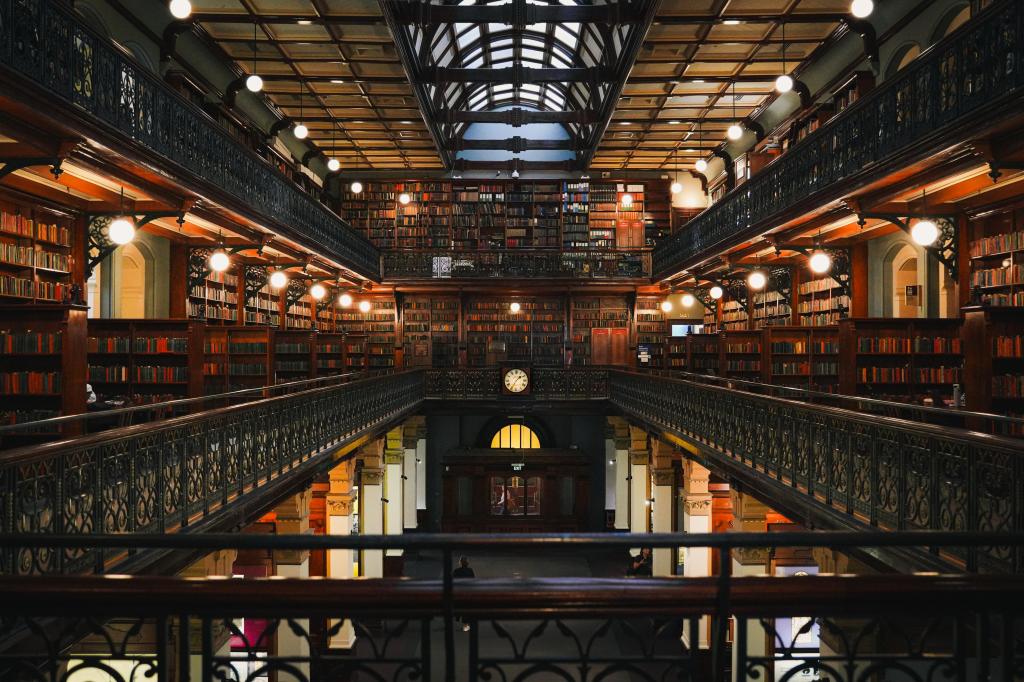
There is an element of our human nature in which we find it necessary to propose resolutions at the beginning of new journeys. For me, this resolution has found me with a divine clarity. This year is about gaining knowledge through study, experience and contemplation. It is a chance to give myself completely to these things. And so, as we arrive at the end of my first blog post, which has found resolution as I sit in the State Library of South Australia (I’m told, the second most beautiful library in the world), I can find no better term for this series than that of ‘Grand Tour’ and to leave you with this final quote.
“Academic work is one of those fields containing a pearl so precious that it is worth while to sell all our possessions, keeping nothing for ourselves, in order to be able to acquire it.”
All quotes are taken from Simone Weil’s essay ‘Reflections on the Right Use of School Studies with a View to the Love of God’ written in 1942.
 teaghantique
Leave a comment